A little orientation
Picture an ordinary month in Philadelphia
Use your own pay information
Check the City's Wage Tax guidance and ask payroll how the rules relate to your situation.
Test repeated travel
Compare the journey you would make most often using actual addresses and working hours.
Check schools separately
Use District enrollment tools for the address and program rather than a citywide school judgment.
A closer look
Which part of daily life needs an answer?
Choose a practical question to investigate before you build the rest of your Philadelphia plan.
Prepare a precise payroll question
Read the City's current Wage Tax guidance and note the residency and work-location details that apply to your plans. Ask payroll how your expected arrangement will be handled, then use the answer alongside your actual bills instead of copying a generic take-home-pay estimate.
A useful questionWhat does payroll need to know about my proposed living arrangement?
Source & next step ↗Test the journey you will repeat
Put a prospective Philadelphia home and your regular destination into SEPTA's planner at your usual travel times. Compare both directions and record the walks and transfers, then decide how that repeated journey would fit with meals, errands, and time at home.
A useful questionWould this journey still work during a busy ordinary week?
Source & next step ↗Start with the address and program
Use the School District's enrollment tools for the Philadelphia address you are considering. Identify the relevant school and ask about the program, enrollment steps, and needs of your household, then keep those answers separate from a general description of city living.
A useful questionWhich school or program question should I settle before moving?
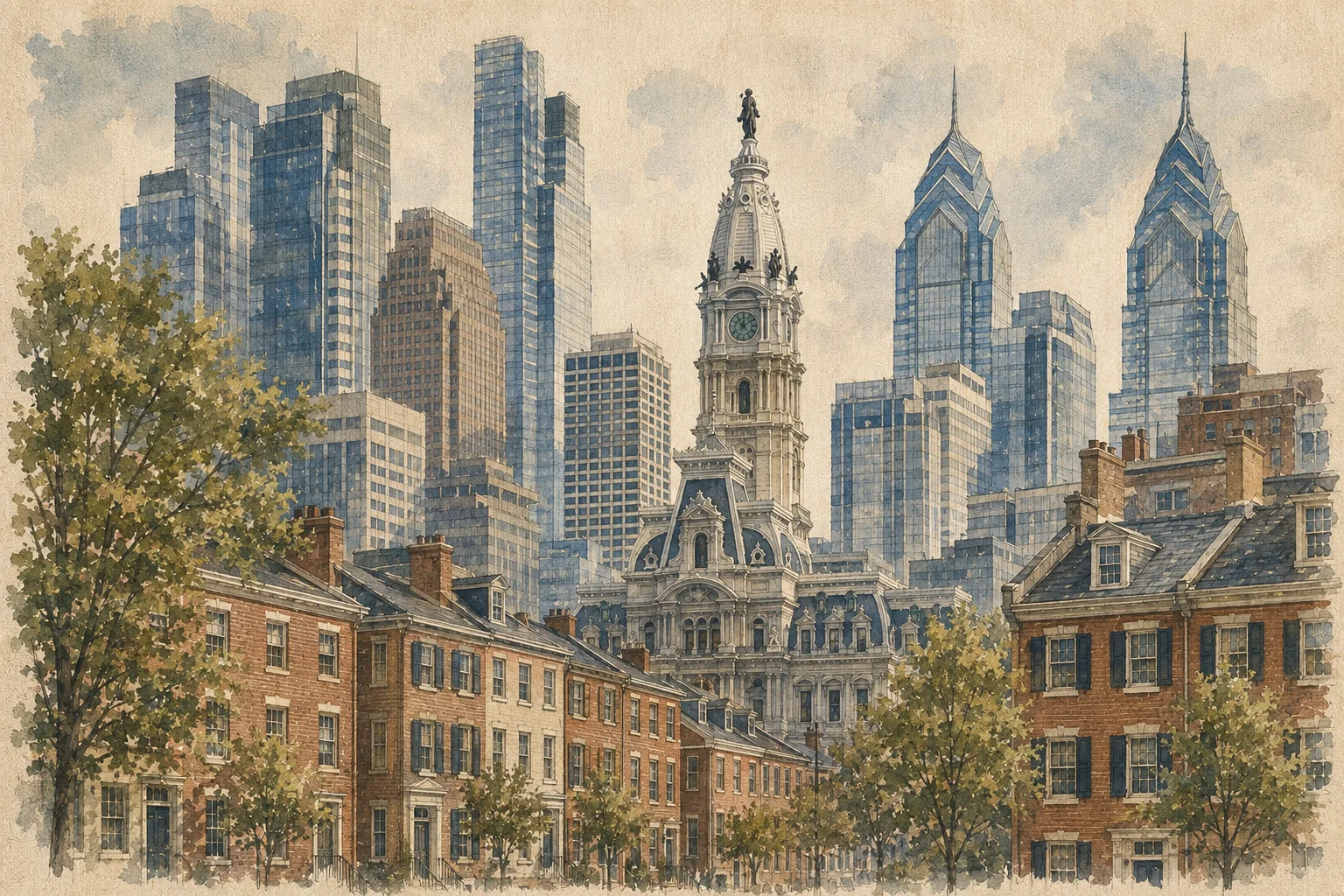
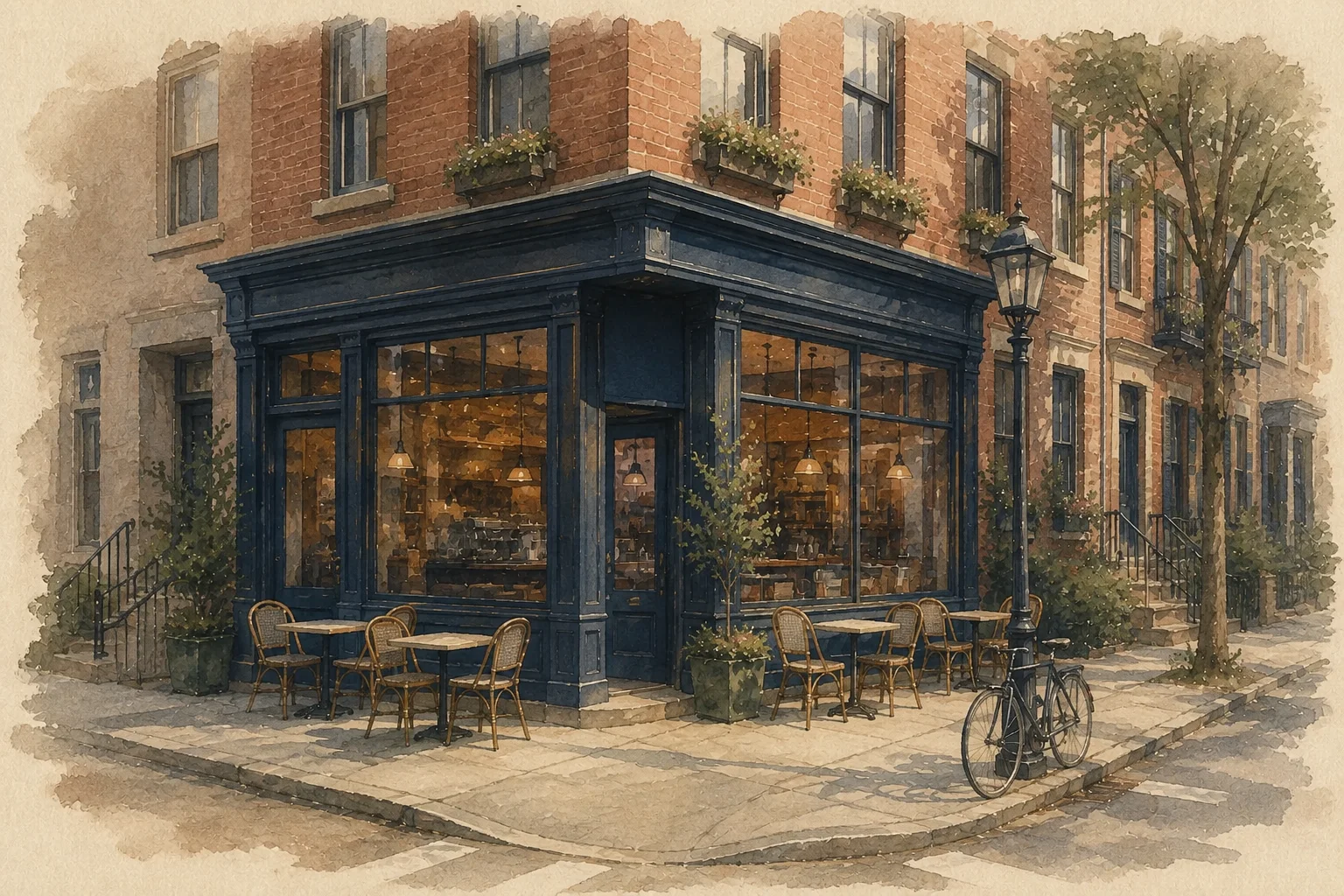
Source & next step ↗Philadelphia housing runs from Victorian twins in Fishtown to luxury high-rises in Rittenhouse and century-old rowhomes in South Philly. Here’s the thing: Philadelphia isn’t trying to be New York, and it has no interest in pretending it wants to be. It’s its own thing—gritty, affordable, walkable, frustrating, authentic, and exactly zero percent apologetic about any of it.
This is what living here actually feels like: housing, transportation, food, taxes, and the everyday logistics of the city.
The Bottom Line Up Front
Philadelphia in one sentence: You get 90% of what NYC offers at 50% of the cost, but you trade perfection for authenticity, and you better be okay with potholes, parking wars, and a 4% wage tax.
Should you move here?
- If you value walkability, food, affordability, and real neighborhood culture over spotless streets and easy parking → yes
- If you need perfect infrastructure, suburban tranquility, or great public schools → probably not
Let’s get into it.
The city in five numbers
All from the guide's own 2025 snapshot.
What Makes Philadelphia Different (The Stuff Tourism Boards and Visit Philly Won’t Tell You)
Philly Has One Foot in the Future and One Rooted Reluctantly in the Past
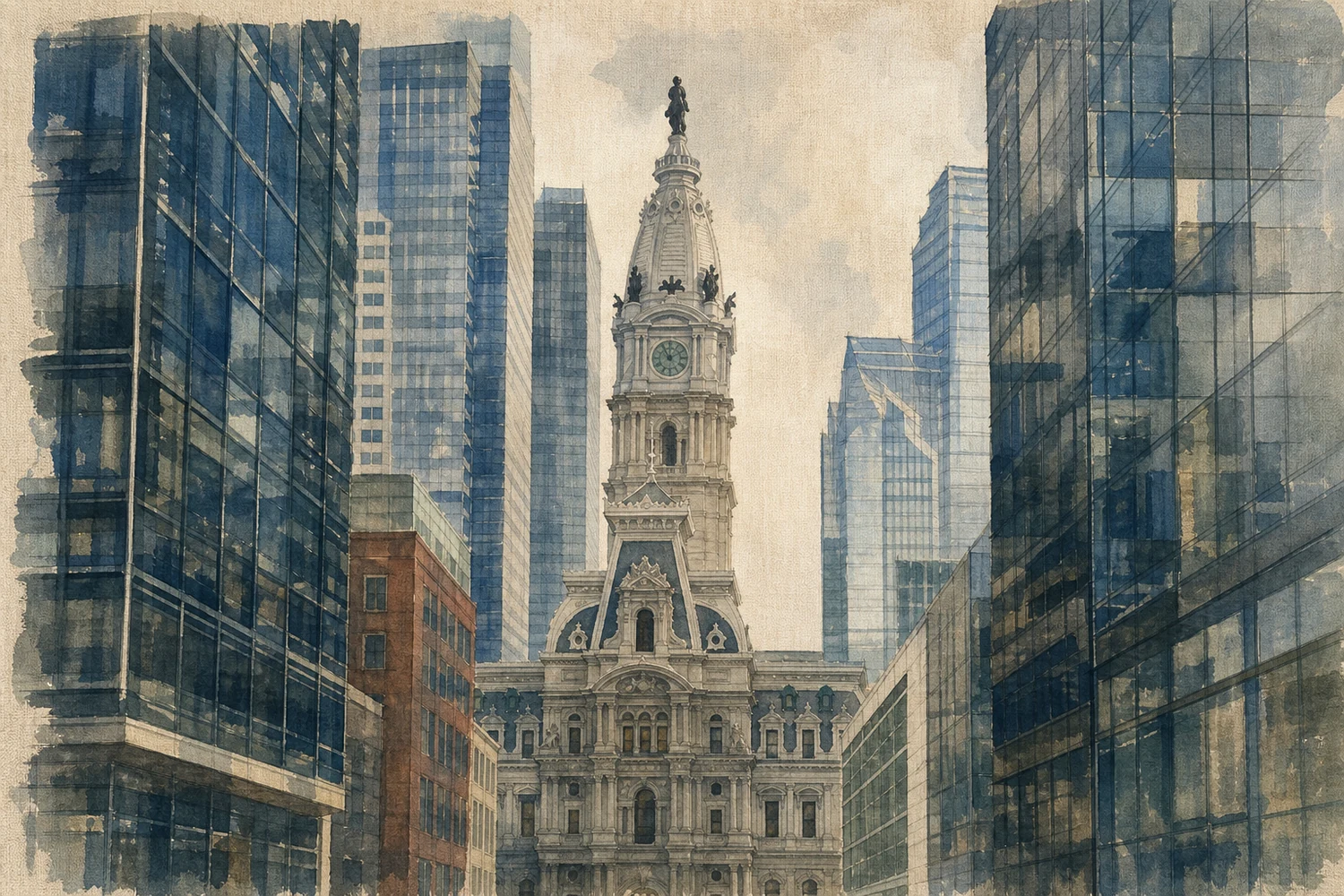
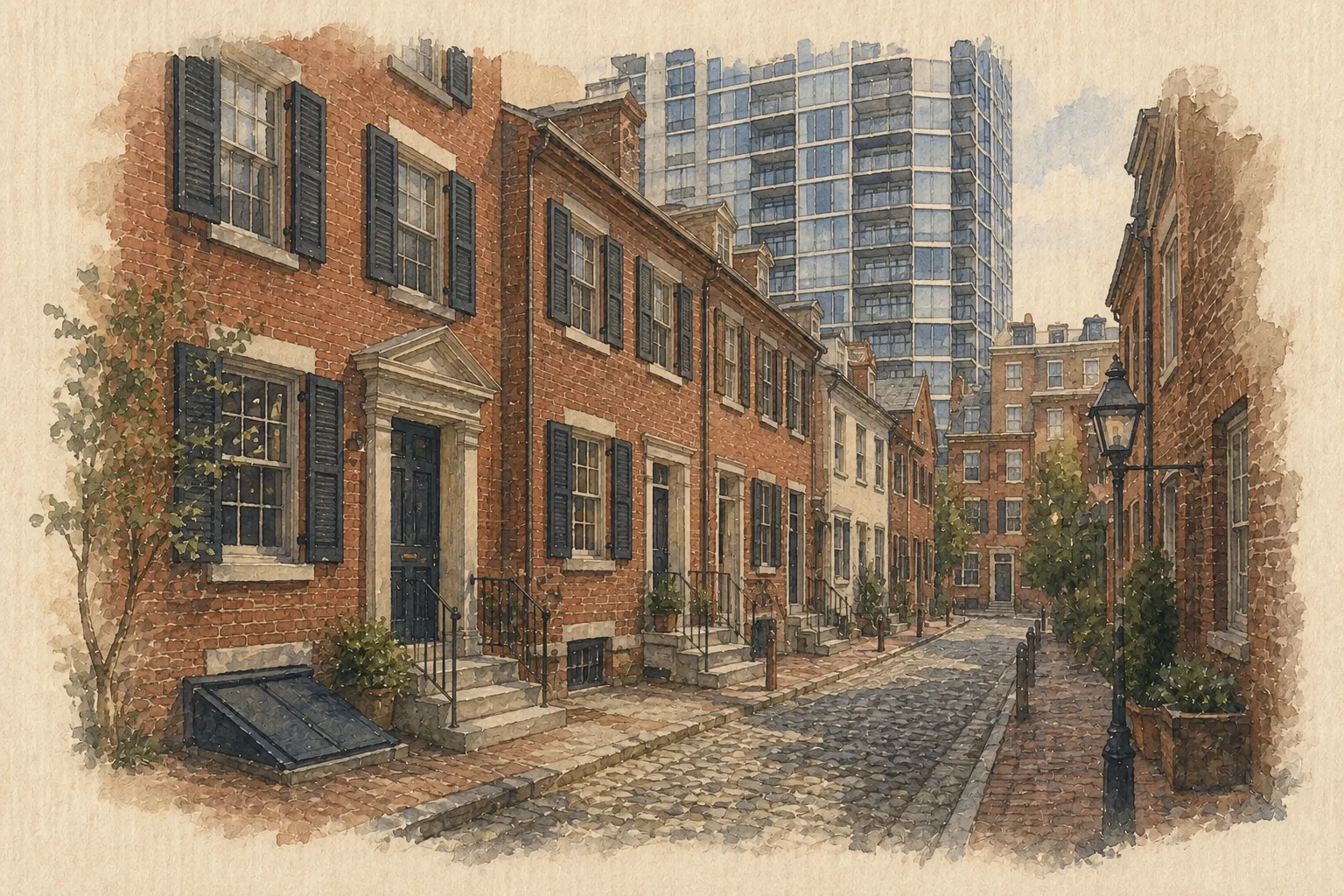
This perfectly captures it. You’ll see 18th-century cobblestone streets next to glass condos. You’ll find James Beard-nominated restaurants in former industrial warehouses. The city preserved more pre-1800 architecture than almost anywhere in America, but it can’t figure out how to fix its potholes.
The real deal:
- This is the birthplace of America (Independence Hall, Liberty Bell, Constitution), but locals mostly treat it like furniture—it’s just there
- We’re the sixth most walkable major city in the US, with a Walk Score of 79
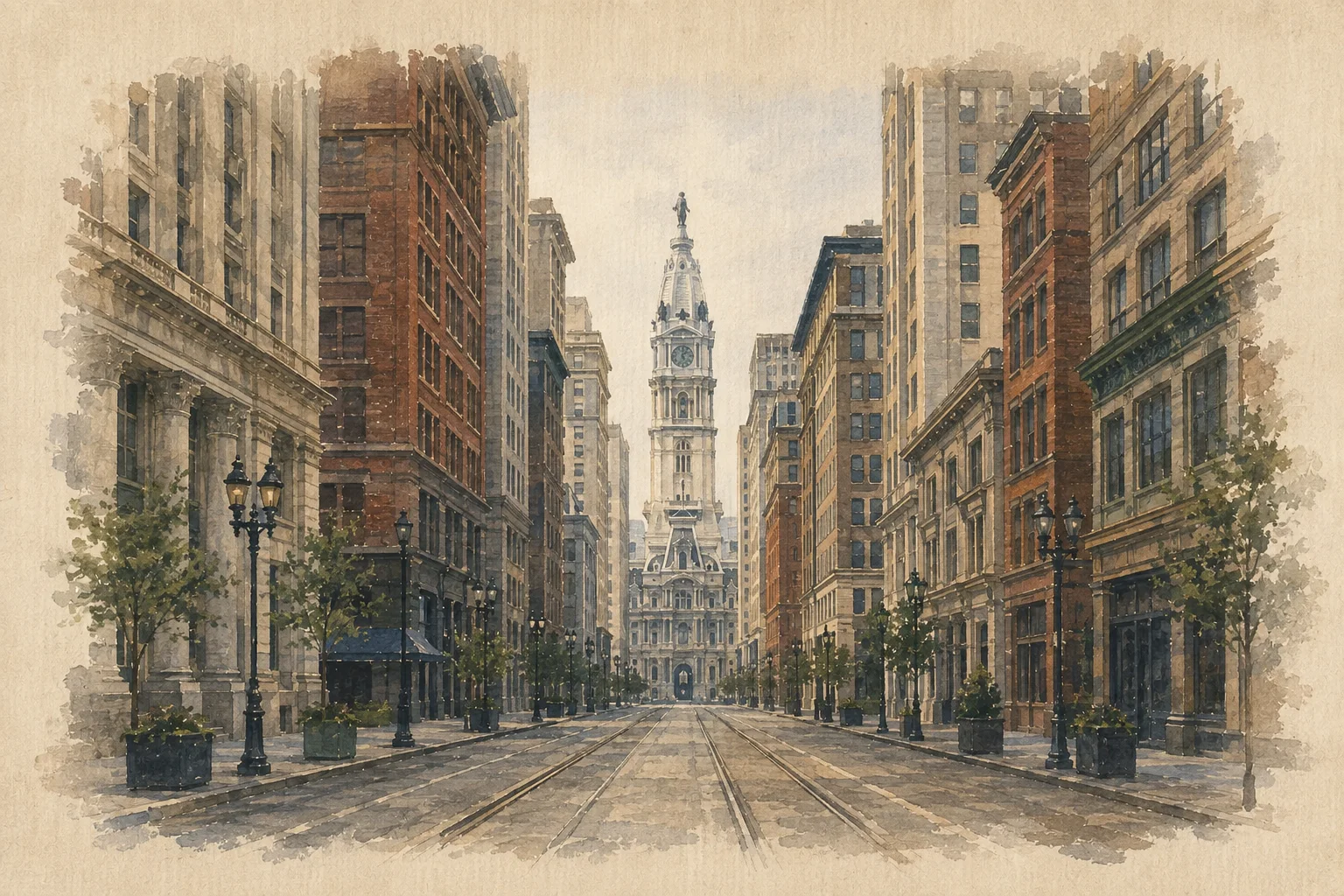
- Center City (that’s “downtown” to you, but never call it that) is only 2 miles across—you can walk river to river in 30 minutes
- We have 200 distinct neighborhoods, each with its own vibe, and they change block by block
- 25% of residents use public transit daily; you genuinely don’t need a car if you live in the right area
The honesty part:
- Infrastructure is crumbling. Roads have potholes that’ll swallow a tire
- Parking is a blood sport. The PPA (Parking Authority) is so notorious there’s a TV show about it
- The city government moves slowly. Permits take forever. Follow-up relentlessly
- It’s dirty—not uniformly, but block by block. Some blocks are pristine, some have trash issues
The Money Reality: Why NYC Transplants Keep Moving Here
Cost of Living: Actually Affordable for a Major City
One client told us: “I looked at new luxury buildings in Manhattan—$5,000 for a one-bedroom. I’m paying $2,100 in Center City Philly for the same thing, and I can actually walk to restaurants.”
The numbers (2025):
- Median home price: $217,000 (vs. $1M+ in NYC/Boston comparable areas)
- 1-bedroom rent in Center City: $1,500-2,000/month
- 1-bedroom in Fishtown/Passyunk/Manayunk: $1,200-1,700/month
- University City/West Philly: $1,000-1,400/month
- Cost of living index: 104.3 (vs NYC 172.5, Boston 150.8, DC 151.9)
Train to NYC: 75-90 minutes on Amtrak, $30-60 if you book ahead. You can live in Philly and visit NYC for dinner. Try doing the reverse.
BUT (and this is important):
The City Wage Tax Nobody Warns You About
If you live OR work in Philadelphia, you pay a city wage tax:
- Residents: 3.735% (effective July 1, 2026)
- Non-residents who work here: 3.425% (effective July 1, 2026)
This is ON TOP OF state income tax (3.07%). So you’re looking at about 7% total before federal.
The calculus:
- If you work remotely and live in Philly, you pay the wage tax
- If you work in the suburbs and live in Philly, you pay the wage tax
- If you live in the suburbs and work in Philly, you pay the lower non-resident rate
Many remote workers strategically live in suburbs with SEPTA access (Conshohocken, Ardmore, Media) to avoid the tax while staying close to the city. Your call.
Property tax trade-off: Philly’s property taxes are high (1.36%) but still lower than many PA suburbs. Some see the wage tax as a wash.
The money reality (2025)
The figures the guide publishes, in its own words: 90% of what NYC offers at 50% of the cost.
Walkability & Transit: Why You Can Actually Ditch Your Car
We clean homes for clients who’ve lived here 5+ years without owning a car. It’s real.
What Works
Center City/Rittenhouse:
- Walk Score: 99-100
- Everything within 10-15 minutes on foot
- SEPTA subway lines cross here (Broad Street, Market-Frankfort)
- Indego bike share every few blocks
Fishtown/Northern Liberties:
- Walk Score: 95+
- “The El” (Market-Frankford Line) gets you downtown in 15 minutes
- Dense restaurant/bar scene on Frankford Ave and Girard Ave
- Bike-friendly (though bike lane parking enforcement is a whole thing)
University City:
- Walk Score: 90+
- Literally built for students, extremely walkable
- Multiple SEPTA trolley lines
- Tons of campus shuttles
SEPTA (our transit system):
- Subway: Two main lines (Broad Street, Market-Frankford “The El”)
- Regional Rail: Connects suburbs to city, runs to airport
- Buses: 70+ routes, reliable-ish
- Cost: $2.50 single ride, ~$100/month unlimited pass
Reality check: SEPTA isn’t NYC’s MTA. It’s functional, not comprehensive. Some residential neighborhoods have poor coverage (Roxborough, parts of South Philly). Late-night service is spotty. It’s dirty. But 25% of residents use it daily, so it works.
What Doesn’t Work
If you need a car regularly:
- Narrow streets (built for horses, not SUVs)
- Street parking is competitive to impossible after 4pm
- Residential permit zones (you’ll need to register)
- Meters run out fast; PPA tickets AGGRESSIVELY
- Daily garage rates: $20-30 downtown
- Car insurance is 40% higher with a city ZIP code
The hack: If you need a car occasionally, Zipcar or the occasional rental beats owning. Some newer luxury buildings (like Two Liberty) have shared car services for residents.
The Food Scene: Why Chefs Actually Want to Work Here
One of our clients is a food writer. She’s eaten everywhere—NYC, SF, Paris. She says: “Philly might be the best restaurant city in America right now, and I’m not exaggerating.”
Why It’s Special
BYOB culture: Due to PA’s liquor licensing laws (licenses cost hundreds of thousands), hundreds of restaurants don’t serve alcohol. Instead, they’re BYOB with no corkage fees.
What this means:
- You buy a $15 bottle of wine at the store, bring it to a great restaurant, pay $0 extra
- Restaurants compete purely on food quality, not alcohol margin
- Fine dining becomes way more affordable
Michelin is arriving (2024-2025): After decades of being ignored, Philly finally got Michelin Guide coverage. The food scene has been here; the recognition is just catching up.
The diversity:
- Ethiopian in West Philly
- Vietnamese in South Philly
- Mexican in South Philly (not Tex-Mex—actual regional Mexican)
- Italian Market on 9th Street (since 1915)
- Israeli in Center City (Zahav won James Beard’s Outstanding Restaurant)
- Filipino, Cambodian, Haitian, Nigerian—if it exists, it’s here
The Only Thing Everyone Agrees On
Reading Terminal Market is non-negotiable. It’s the one attraction that locals and tourists, old-timers and transplants, everyone agrees you can’t miss. Indoor market, local and international food, been here since 1893. Go hungry.
The Cheesesteak Reality
Tourist spots: Pat’s and Geno’s are fine, but they’re tourist traps. South Philly at 2am after the bars close.
Where locals actually go:
- Jim’s on South Street (watch for reopening after fire)
- Dalessandro’s in Roxborough
- Angelo’s Pizzeria in South Philly (cash only, closed Mon/Tues, worth the wait)
- John’s Roast Pork (the roast pork is actually better than the cheesesteak)
How to order: “Whiz wit” = Cheez Whiz and onions. “Provolone witout” = provolone, no onions. Don’t overthink it.
Neighborhoods: The Block-by-Block Reality
Philadelphia is called “The City of Neighborhoods” for a reason. Here’s the honest breakdown.
Center City (Never Call It “Downtown”)
The deal: The walkable core from river to river. Everything’s here—offices, restaurants, museums, Rittenhouse Square, Chinatown, the Gayborhood.
Who lives here:
- Young professionals (20s-30s without kids)
- Empty nesters in luxury condos
- Students at Jefferson or UArts
- Anyone who wants car-free life
The good:
- Walk Score 95-100
- Safest part of the city statistically
- Restaurant density is insane
- SEPTA access to everywhere
- Cultural events constantly
The challenges:
- Expensive ($1,500-3,000/month for 1BR depending on building)
- Tourist crowds in some areas
- Homeless population visible in certain blocks
- Street parking nearly impossible
Insider tip: Center City District (a business improvement group) supplements city services with extra cleaning and security. That’s why it’s cleaner/safer than other areas—private supplemental services.
Rittenhouse Square
The deal: Philly’s “Central Park” neighborhood. Tree-lined square, high-end restaurants, boutiques, professionals.
Median rent: $1,800-2,500+ for 1BR
Median home price: $650,000
Who lives here: High earners, older professionals, grad students on parental money
The vibe: Polished. You’ll see more Canada Goose jackets here than anywhere. It’s safe, clean, walkable, and expensive. Some call it “where the snobs live,” but that’s debatable—it’s just pricey.
Fishtown / Northern Liberties
The deal: Industrial-turned-arts-hub-turned-gentrified. Breweries, murals, young crowd.
Median rent: $1,400-1,900 for 1BR
The vibe: Hipster, but the gentrification is complete—it’s not “emerging” anymore, it’s arrived
The good:
- Frankford Ave and Girard Ave restaurant/bar scenes
- The El connects you downtown in 15 minutes
- Walkable within neighborhood
- Arts/music venues
- Younger demographic (25-35)
The challenges:
- Parking is “cut throat” per locals
- Gentrification tension between old-timers and newcomers
- Noise if you live near the bars
- Pricier than it used to be
Insider take: This is where transplants end up. If you’re moving from another city and want walkability + scene without paying Rittenhouse prices, this is it.
University City / West Philly
The deal: UPenn and Drexel’s home. College vibe, younger demographic, very walkable.
Median rent: $1,000-1,500 for 1BR (shared rooms cheaper)
Who lives here:
- Students (obviously)
- Grad students
- Medical residents (Penn hospitals nearby)
- Recent grads who haven’t left yet
The nuance: “University City” (near campus) is the densest, most walkable stretch. Farther west and north, the character changes block by block.
South Philly (East Passyunk, Pennsport, Bella Vista)
The deal: Rowhomes, Italian Market, diverse immigrant communities, family-oriented.
Median rent: $1,200-1,700 for 1BR
The vibe: Working-class roots, now gentrifying. Authentic Philly feel—this is where “Rocky” was filmed.
The good:
- East Passyunk Ave restaurant corridor (amazing food)
- Italian Market for groceries
- Rowhome architecture
- Strong community feel
- More affordable than Center City
The challenges:
- Limited subway access (mostly buses)
- Parking battles
- Some areas rougher at night
- Gentrification debates playing out in real-time
Old City
The deal: Historic district. Cobblestone streets, Independence Hall, 1700s buildings.
Who lives here: People who can afford $2,000+ rent and want to live in a museum
The reality: Beautiful, historic, touristy. You’re living where the nation was founded. Cool for a year, then you realize you’re dodging tour groups to get milk.
Manayunk
The deal: Feels suburban but is technically city (so you pay the wage tax). Main Street bar scene.
Who lives here: 22-26 year olds, post-college crowd
The pattern: Everyone moves here fresh out of college, parties on Main Street for 2-3 years, then leaves. If you’re 30+ and in Manayunk, you’re the old person at the bar.
Note: It’s INSIDE city limits, so you pay the city wage tax despite the suburban feel. This catches people off guard.
Neighborhoods, block by block
Seven of the places the guide breaks down, with the rent band and the trade-off it names for each.
Center City
River to river · never call it downtownEverything is here — offices, restaurants, museums, Rittenhouse Square, Chinatown, the Gayborhood. Walk Score 95–100 and statistically the safest part of the city. Expensive, touristed in places, and street parking is nearly impossible.
Rittenhouse Square
1BR $1,800–$2,500+The city's Central Park neighborhood: tree-lined square, high-end restaurants, boutiques. Median home price $650,000. Polished, safe, clean, walkable, and expensive.
Fishtown / Northern Liberties
1BR $1,400–$1,900Industrial turned arts hub turned gentrified. Frankford and Girard carry the restaurant and bar scenes, and the El reaches downtown in 15 minutes. Parking is cut-throat and it costs more than it used to. This is where transplants end up.
University City / West Philly
1BR $1,000–$1,500UPenn and Drexel's home — young, very walkable, multiple trolley lines. University City near campus is the densest, most walkable stretch; farther west and north the character changes block by block.
South Philly
1BR $1,200–$1,700East Passyunk, Pennsport, Bella Vista. Rowhomes, the Italian Market, diverse immigrant communities, and a strong community feel. Limited subway access, parking battles, and gentrification debates playing out in real time.
Old City
$2,000+ rentCobblestone streets, Independence Hall, 1700s buildings. Beautiful, historic, touristy. Cool for a year, then you realize you are dodging tour groups to get milk.
Manayunk
Main Street bar sceneFeels suburban but sits inside city limits, so the city wage tax still applies — which catches people off guard. The pattern: move in fresh out of college, party on Main Street for two or three years, then leave.
Crime & Safety: The Honest, Non-Alarmist Take
This is THE debate. Locals are exhausted by it. Here’s what we actually see.
- A Brookings Institute study found that in Philadelphia, NYC, and Chicago, downtowns are some of the safest places to be
- “The vast majority of all violent crime occurs between people who are already acquainted” (not random street crime)
- Center City, Rittenhouse, Old City, Grad Hospital, and parts of Fishtown/NoLibs are statistically safe
The Block-by-Block Reality
Safety here is read block by block, not neighborhood by neighborhood.
The pattern:
- Center City → very safe, especially near Rittenhouse/Wash West
- Popular gentrified neighborhoods (Fishtown, NoLibs, Grad Hospital) → generally safe, use normal city awareness
- Transitioning neighborhoods (Point Breeze, Brewerytown) → block by block; research your specific block
- North Philly, Kensington, deep West Philly → avoid unless you have a reason
Transplants vs. Longtime Residents
Transplants (moved here 2-5 years ago): “I’ve never felt unsafe. People are overreacting.”
Longtime residents (born and raised): “The city has gotten worse. Crime is out of control.”
What’s happening: Transplants mostly live in safe, gentrified areas. Longtime residents remember when Fishtown was sketchy and see the displacement. Both are right from their perspective.
Practical Safety Tips
- Walk with confidence, look like you belong
- Don’t flash expensive items
- Trust your gut—if a block feels off, turn around
- Late night: Uber vs. walking alone (especially for women)
- Car break-ins are common—don’t leave valuables visible, even loose change
- Package theft happens—get a UPS box or have deliveries held
The real reality: As a single woman in her late 20s, one of our clients said: “I’ve lived in Center City for 3 years. I walk home from bars at midnight regularly. I’ve never had an issue. But I also don’t walk through dark parks alone or wander into areas I don’t know.”
Schools: The Hard Truth for Families
If you have school-age kids, this is your biggest decision point.
Public Schools: Not Great
The reality:
- Philadelphia School District is chronically underfunded
- Achievement gaps are significant
- Infrastructure is aging
- Teacher retention is challenging
- Some schools have supply shortages (teachers buying their own materials)
What locals say: “The School District is a horrorshow, mostly due to the state’s racist systemic underfunding.”
But There Are Exceptions
Good public schools exist (by catchment): Research “catchments”—school zones that determine which public school your address feeds into. Some catchments are excellent:
- Certain Center City elementary schools
- Some Northwest Philly schools (Roxborough, Mount Airy)
- Magnet schools (competitive admission)
The pattern: Good public schools drive home prices in those catchments. A house in a good catchment might be $100K more than three blocks away.
Private & Charter Options
Private schools: Many families go this route
- Quaker schools (strong tradition in Philly)
- Catholic schools (more affordable)
- Independent schools (expensive but excellent)
- Cost: $15,000-$35,000/year depending on school
Charter schools: Free, lottery-based admission, quality varies wildly
The Suburban Exodus
Why families leave:
- Better schools in suburbs (Main Line, Montgomery County, Delaware County)
- Lower property taxes in some suburbs
- Yards, driveways, garages
- Perceived safety
Why some stay:
- Cultural access (museums, restaurants, events)
- Walkability and no car needed
- Diversity
- Community feel in certain neighborhoods
- Private school + city lifestyle works for some budgets
The age-30 pattern: Multiple people mentioned feeling like they’re “aging out” of the city around 30, especially once kids arrive. This is real.
The Parking Nightmare (We Have to Address It)
Every client who owns a car complains about parking. Every. Single. One.
Why It’s Terrible
- Streets built in the 1700s for horses, not F-150s
- Narrow, one-way streets everywhere
- Residential permit zones (you need to register)
- Street cleaning days (move your car or get ticketed)
- Snow emergencies (complex rules, easy to violate)
- Meters downtown run $2-4/hour
- Garages downtown: $20-30/day
The PPA (Philadelphia Parking Authority)
What locals say:
- “The PPA is so notorious, there’s a nationwide television show about it” (Parking Wars)
- “You will learn the hard way how horrible the PPA is”
- “The parking authority will catch you 90% of the time your meter runs out”
They are legendary for:
- Aggressive ticketing
- Towing quickly
- No mercy on expired meters
- Enforcing rules during snow emergencies
Neighborhood-Specific Parking Reality
Center City/Rittenhouse: Forget it. You need a garage ($200-400/month) or street hunt for 30+ minutes.
Fishtown/Northern Liberties: “Cut throat” after 5pm. Permit zones help residents, but it’s still competitive.
South Philly: Dense rowhomes, narrow streets, everyone has a car. Locals time activities around parking availability.
University City: Near campus = impossible. A few blocks away = manageable.
Manayunk: Difficult. Main Street parking is a nightmare on weekends.
The Solution
If you’re moving to Philly:
- Live in a walkable neighborhood and ditch the car (Center City, Fishtown, University City)
- Get a building with parking (garage or valet service)
- Live in a less dense neighborhood (Roxborough, Mount Airy, Chestnut Hill—but you’ll need the car for everything)
- Use Zipcar/car share for occasional needs
Remote workers: Consider suburbs with SEPTA access. You get easy parking AND city access when you want it.
The Weather: Prepare for All Four Seasons
What You’re Getting
Winter (Dec-Feb):
- Average lows: 25-35°F
- Snow: 20-30 inches total (not Chicago-level, but real)
- Gray skies, short days
- You’ll need a real winter coat
- Shoveling sidewalks is YOUR responsibility (fines if you don’t)
Spring (Mar-May):
- Beautiful, best time to be here
- Cherry blossoms in Fairmount Park
- Outdoor dining starts
- Unpredictable (could be 40° or 70° same week)
Summer (Jun-Aug):
- Hot and humid (80s-90s°F)
- Spruce Street Harbor Park opens (hammocks, beer garden)
- Every festival happens now
- AC is mandatory
Fall (Sep-Nov):
- Peak Philly season
- Crisp weather, colorful leaves
- Eagles season starts (city goes nuts)
- Outdoor activities before winter
Better than: Chicago (colder, more snow), Boston (colder)
Worse than: DC (milder), Atlanta (warmer)
All four seasons, honestly
Better than Chicago and Boston, worse than DC and Atlanta — the guide's own comparison.
Average lows of 25–35°F, 20–30 inches of snow, gray skies and short days.
The move · Get a real winter coat, and shovel your own sidewalk — that is your responsibility, with fines if you don't.
Beautiful and the best time to be here, but unpredictable: 40° or 70° in the same week.
The move · Cherry blossoms in Fairmount Park, and outdoor dining starts.
Hot and humid, 80s into the 90s. AC is mandatory.
The move · Spruce Street Harbor Park opens with hammocks and a beer garden, and every festival happens now.
Peak Philly season. Crisp weather, colorful leaves.
The move · Eagles season starts and the city goes nuts. Get the outdoor things done before winter.
The Culture & Attitude:
What People Mean by “Philly Attitude”
The directness:
- We say what we mean
- We don’t suffer fools
- We’re loud, but we’re not necessarily angry
- Sarcasm is the default mode
What transplants notice:
- “The ‘directness’ of the area is quite shocking. New Yorkers find such directness pretty offensive.”
- “We’re loud and proud. Most times, we’re not angry, we just sound like we are.”
The love underneath:
- Neighborhoods hold “beef & beers” (fundraisers) when someone needs help
- Strangers will push your car out of snow
- Block parties where everyone shows up
- “Philly can be the warmest place you’ve ever lived in. When I moved to New York, I couldn’t believe the difference.”
The “Good Enough” Problem
Multiple people independently mentioned Philly’s “good enough” attitude:
- City services move slowly
- Infrastructure fixes take forever
- “Philly doesn’t aspire to be much more than it already is”
- It’s aggravating if you expect efficiency
What this means:
- Permit applications: Follow up relentlessly
- Potholes: Report them, maybe they’ll get fixed
- City government: Patience required
- Construction: Everywhere, constantly, slowly
Sports Culture (It’s Intense)
The teams:
- Eagles (football) – religion-level intensity
- Phillies (baseball) – passionate but less intense
- 76ers (basketball) – “Trust the Process” era created obsession
- Flyers (hockey) – Gritty the mascot is a cultural icon
The reputation:
- We threw snowballs at Santa (1968, we’ll never live it down)
- We booed Santa (also that day)
- We destroyed HitchBOT the hitchhiking robot
- We riot whether we win or lose (Super Bowl 2018 proved this)
Game day reality:
- Don’t wear Dallas, NY, or New England gear
- Bars are PACKED
- “Go Birds” is a standard greeting September-February
- The city gets “decimated” win or lose
Who Should Move to Philadelphia
You’ll Thrive Here If:
You value authenticity over perfection
- You don’t need spotless streets, you want real neighborhoods
- You appreciate old architecture with quirks
- You want diverse, lived-in communities
You prioritize walkability
- You hate driving or sitting in traffic
- You want to walk to dinner, bars, groceries
- You’re okay with public transit’s limitations
You’re budget-conscious but not broke
- You want big-city amenities without NYC prices
- You can afford $1,500-2,000/month rent but not $3,500
- You want to save money while living in a real city
- You care about actual food quality, not just Instagram-ability
- You appreciate diverse cuisines and chef-driven restaurants
- BYOB culture excites you (cheap wine at the store, bring it to dinner)
You’re under 30 without kids
- School quality doesn’t matter to you yet
- You want nightlife, culture, young professionals
- You’re in the “explore a city” phase of life
You work remotely or in healthcare/education
- Philadelphia’s job market is strongest in healthcare and universities
- Remote work + Philly affordability = financial arbitrage
- You can avoid the wage tax if you live in suburbs
You want access without commitment
- 90 minutes to NYC for the occasional weekend
- 2 hours to DC, 2 hours to mountains, 1.5 hours to beach
- You want it nearby, not every day
You Should Skip Philly If:
Schools are non-negotiable
- You want great public schools included
- You don’t want to pay for private school
- You’re not willing to research catchments obsessively
- → Move to the suburbs (Main Line, Montco, Delco)
- Your job is in the suburbs (unless hybrid)
- You can’t handle parking stress
- You’re not near transit
- → This city will frustrate you
You expect efficiency and perfection
- Potholes drive you crazy
- Slow city services infuriate you
- You need things to work smoothly always
- → Try DC or Boston
Safety is your absolute #1 priority
- You need guaranteed low crime
- You can’t handle block-by-block variance
- Urban grittiness makes you uncomfortable
- → Suburbs or smaller cities
You’re very image-conscious
- You need NYC prestige
- You care what people think about your city
- You want the hottest, trendiest everything
- → Philly doesn’t care if you like us
- Winter is real here (25-35°F, 20-30″ snow)
- Gray November-March
- You need sunshine year-round
- → Go south
Who this city is for
The guide answers the question directly, in both directions.
- You value authenticity over perfection, and want real neighborhoods rather than spotless streets.
- You'd rather walk to dinner, bars, and groceries than drive anywhere.
- You want big-city amenities without NYC prices — $1,500–2,000 rent, not $3,500.
- You're a foodie. BYOB means a store-bought bottle at a great restaurant with no corkage.
- You're under 30 without kids, or you work remotely, in healthcare, or in education.
- Schools are non-negotiable and you won't research catchments obsessively.
- You need a car daily and can't handle parking stress.
- You expect efficiency. Potholes and slow city services will infuriate you.
- Safety is your absolute first priority and block-by-block variance bothers you.
- You hate cold. Winter here is 25–35°F and gray from November to March.
Practical Moving Advice
Before You Move
Visit first: Seriously. Spend 3-4 days here. Walk neighborhoods day and night. Talk to people at bars and coffee shops.
Research your block, not just neighborhood: “Philly is block by block.” One block can be perfect, next block sketchy. Use Google Street View, visit in person.
Line up a job first: The 2010 advice still holds: “Bad plan. The job market is poor. Look for a job before you move.”
Understand the wage tax: Calculate your actual take-home pay after 3.735% city + 3.07% state + federal.
Finding Housing
Where to search:
- Craigslist (yes, still)
- Apartments.com
- Zillow
- Trulia
- Facebook groups (Philly Apartments, specific neighborhood groups)
Red flags:
- No pictures = skip
- “Great neighborhood!” without specifics = research carefully
- Way below market rate = scam or terrible condition
- Cash only = scam
Lease reality:
- Most leases are 1 year
- Security deposit usually = 1 month rent
- First and last month often required
- Credit check standard
- Some landlords require 3x rent in income
Move-in cleaning: We’re biased, but seriously—these old buildings accumulate dust and grime. A deep clean before you move in is worth it. (We clean 500+ Philly homes monthly; we know what these properties need.)
Getting Set Up
City wage tax registration: Register with the city within 30 days
Parking permit: If your neighborhood has residential parking, register immediately ($35/year)
PGW (gas), PECO (electric), Philadelphia Water: Set up utilities before move-in
Trash & recycling: City pickup, learn your schedule (fines for wrong day/wrong bins)
SEPTA Key Card: Get one at any station for transit
Driver’s license: You have 60 days to get a PA license if you’re moving from another state
First Month Checklist
Register for city wage tax
Get parking permit (if applicable)
Set up utilities
Register to vote (if desired)
Find your local coffee shop (latte buddies are real)
Identify your grocery store (ShopRite, Acme, Giant, Trader Joe’s, local)
Download Citizen app (hyperlocal crime alerts—love it or hate it)
Join neighborhood Facebook group
Learn your SEPTA lines
Figure out your trash day
The Insider Stuff (What Proves You Actually Live Here)
Language
Say this (or not):
- “Center City” (not downtown)
- “The El” (Market-Frankford Line)
- “Hoagie” (not sub or hero)
- “Jawn” (thing—but don’t force it, locals can tell)
- “The Wiss” (Wissahickon Park)
- “Down the shore” (Jersey Shore)
- “Wooder” (water—Philly pronunciation)
Don’t say this:
- “Downtown” (instant tell you’re new)
- “Phili” (it’s Philly, you WILL get roasted)
- “Pat’s and Geno’s are the best cheesesteaks” (tourist)
Cultural Literacy
You need to know:
- Reading Terminal Market is mandatory (everyone agrees)
- The Mummers Parade happens New Year’s Day (string bands, costumes, 2nd Street party)
- It’s “Quizzo” not “pub trivia”
- Gritty (Flyers mascot) is a cultural icon
- We destroyed HitchBOT (locals embrace the bad reputation)
- The Santa batteries incident (1968, we’ll never live it down)
- “Go Birds” is a greeting during football season
Royal Sushi over Pat’s: If you recommend Royal Sushi for world-class sushi or Dalessandro’s for cheesesteaks, locals know you actually live here. If you recommend Pat’s and Geno’s, you just failed the test.
The Insider Stuff (What Proves You Actually Live Here)
Block dynamics:
- Introduce yourself to neighbors when you move in
- In rowhome neighborhoods, you’re responsible for your sidewalk (sweep it, shovel snow)
- Some blocks have unspoken parking spots (“that’s always been Marie’s spot”)
- Block captains exist—they organize stuff, know the block
Winter rules:
- Shovel your sidewalk within 6 hours of snow stopping (fines if you don’t)
- Don’t steal someone’s parking spot after they shoveled (chairs mark saved spots)
- Parking chairs are sacred after snowstorms
PPA strategy:
- Keep quarters in your car always
- Set phone reminders for meter time
- Know the street cleaning schedule
- Residential permits are strictly enforced
- During snow emergencies, read the rules carefully (easy to violate)
Restaurant culture:
- BYOB is normal—bring wine, save money
- Cash-only places are common (bring cash)
- Tipping: 18-20% standard
- Reservations getting harder (food scene blowing up)
The Secret Favorites (Not in Tourist Guides)
Free stuff only locals know:
- Art Museum: Pay-what-you-wish Wednesdays 5-8pm
- The Barnes: Free first Sunday monthly (arrive early, it fills up)
- First Fridays: Old City galleries open late, first Friday monthly
- Curtis Institute: Free student recitals (world-class musicians)
- Schuylkill River Trail: 30 miles, connects to Valley Forge
- Free kayaking Saturdays at Bartram’s Gardens
Where locals actually hang:
- Wissahickon Valley Park (about 1,800 acres and more than 50 miles of trails IN the city)
- Devil’s Pool (swimming hole in the Wiss)
- Graffiti Pier (technically trespassing, everyone goes)
- Race Street Pier (sunset views without Penn’s Landing crowds)
- Late-night happy hours at El Rey (11pm-midnight Fri/Sat)
The Citywide Special: Shot of Jim Beam + PBR = ~$4-6 at dive bars. “Citywide specials will fuck your night up really quickly” per locals. You’ve been warned.
The Future: Why 2026 Matters
Philadelphia is having a moment, and 2026 is the catalyst.
What’s coming:
- FIFA World Cup (6-9 games in Philly)
- 250th Anniversary of America
- MLB All-Star Game
- PGA Championship
Translation: 5+ million extra visitors. National and international spotlight.
What locals predict:
- “Once downtown gentrifies, which will only be a matter of time, expect real estate to skyrocket”
- “Prices will be double in the next 10 years”
- “Get in before prices double”
Why it’s believable:
- Michelin just arrived (food scene validation)
- More remote workers discovering the value
- 4,600+ New Yorkers moved here in 2019-2020 alone
- 15,000 apartment units recently built and absorbed
- Construction everywhere (sign of demand)
The unemployment rate is at its lowest since the 1990s, and more Philadelphians are college-educated than ever. The trajectory is up.
The Final Verdict: One Foot in the Future, One in the Past
Let’s go back to where we started.
Philadelphia isn’t perfect. The infrastructure is crumbling. Parking is hell. Schools need massive help. The wage tax hurts. It’s dirtier than it should be, and the city government moves like molasses.
But.
You can walk to world-class restaurants where a chef who trained in Paris is serving incredible food, and you’re bringing a $12 bottle of wine because it’s BYOB. You can live in an 18th-century rowhome that’s been converted into a modern apartment for $1,400/month. You can hop on a train and be in NYC in 75 minutes. You can walk to work, to dinner, to bars, to museums, and you’ll never sit in traffic.
The neighborhoods have actual character—not the fake “character” of planned developments, but the real thing that comes from generations of people living and working in the same blocks. Your neighbors will help you shovel your car out of the snow. The block captain will organize a “beef & beer” fundraiser when someone on the block gets sick.
This is a city that gives you 90% of what NYC offers at 50% of the cost, but you have to be willing to accept the trade-offs.
As one transplant perfectly put it: “Philly has one foot in the future and one rooted reluctantly in the past. There is a learning curve at first, but Philly is a rad place to live.”
Moving to Philadelphia?
Let Hometress handle your move-in cleaning. Philadelphia housing runs from Victorian twins in Fishtown to historic rowhomes in South Philly to luxury high-rises in Center City, and each one needs something different after decades (sometimes centuries) of accumulated dust and grime.
[Schedule Move-In Cleaning →]Already here? Set up recurring cleaning. We serve Center City, Rittenhouse, Fishtown, Northern Liberties, University City, South Philly, Old City, Manayunk, and other Philadelphia neighborhoods — enter your ZIP code to check current availability.
[Get a Quote →]Updated October 2025. Got questions or updates? We’re locals—we actually want to know.
Make it yours
Build your first-month picture
A short list to turn what you read into your own next steps.
Saved checks stay on this device when browser storage is available. This is a personal planning list, not a property inspection or professional assessment.
Sources & next steps
Useful advice should
show its working.
These resources support the reader tools above and help you check details for your own address, date, or plans.
- Philadelphia Wage Tax guidance
Official tax information helps you identify questions to confirm with payroll.
- SEPTA trip planner
Compare transit journeys using your actual stops, date, and departure time.
- School District enrollment tools
Find the District's school finder and enrollment guidance; no school ranking is implied.
This is a personal planning worksheet, not a tax calculation or citywide affordability, safety, or school ranking. Use current provider answers and your own financial information.
Keep exploring